Showing posts with label historical. Show all posts

Thursday, 13 September 2012

Borrowed Costume: Yang Guifei


If she turned her head and smiled she cast a deep spell, Beauties of Six Palaces vanished into nothing.
Hair’s cloud, pale skin, shimmer of gold moving,
Flowered curtains protected on cool spring evenings.
Those nights were too short. That sun too quick in rising.

The emperor neglected the world from that moment,
Lavished his time on her in endless enjoyment.
She was his springtime mistress, and his midnight tyrant.
Though there were three thousand ladies all of great beauty,
All his gifts were devoted to one person.

Yang Yuhuan, more commonly known by her title Yang Guifei (Imperial Consort Yang), is thought to be one of the four most beautiful women in Chinese history. She was, of course, so beautiful that it was a curse. Both sides of the rebellion believed her to the root cause of the Emperor's negligence and the loyalists demanded her execution. The Emperor ordered that she be taken to a Buddhist shrine and strangled to death.*

She was first married to a prince, one of Emperor Xuanzong's many sons. There various stories about how she came into the Emperor's favour, but she did and was eventually made imperial consort through a ruse that involved her briefly becoming a Taoist nun (thereby voiding her first marriage).

Like many famous female figures of folklores, there's an uncomfortable aftertaste of sexism that comes with her story. It can be said that her story revolves around the trope Love Ruins the Realm (warning: tvtropes link) for not only is she responsible for a rebellion, it also marks the beginning of the Tang dynasty's downfall. But it isn't just Love that ruins the Realm, it's the woman. It is a theme that threads through Chinese folklore: Red Dye Ruins Water.

For it is women that causes the downfall of monarchs and nations: the Emperor, wallowing in the pleasures of the flesh, gives in to her frivolous demands (famously the lychees were relayed to the capital from Guangzhou) and allow her corrupt relatives free reign at court.

Most of stories I know present her as hopelessly tragic, fatefully cursed and politically naive. She is both the root cause of the Tang dynasty's downfall and yet without true agency its cause. It is not her ambitions or her scheming that tears apart the Imperial court, but simply her transcendent, immortal beauty. She is more analogous to Helen of Troy than a true femme fatale.

As almost synonymous with beauty, Yang Guifei is also interesting for the fact that she is often held to be plump. She is alluded to in the saying about differing standards of beauty, often contrasted with Zhao Feiyan, who was said to be very slender. (Which of course, makes this a terrible cosplay of her. But there are only so many historical women who have distinctive outfits.) The way she is talked about, the way her alleged beauty is described (and sometimes discredited) is especially interesting given the various pressures on Asian women to be skinny.

Numerous poems, books, films and so forth have been inspired directly and indirectly by her. Tale of Genji, regarded by some as the first novel written by a woman, was inspired by The Song of Everlasting Sorrow (partially quoted above). Various sumptuously costumed tv series are linked to here. There is even a musical, named Sacrifice, though I feel rather ambivalent about their understanding of the story: "Ultimately the message is simple; true love means sacrifice. [...] This great story enticed three western authors to China, intoxicated by its exoticism. What they found is the perfect vehicle for drawing west and east together; a transcendent love story that is, in fact, universal."

The costume comes in three layers, though only the scarlet outer robe is really visible. The hair is not a wig, though only a portion of it is my own. The shape of the train is what makes this costume really dramatic, with the sheer expanse of red. Tang dynasty costume was very much about a high waistline, enormous flowing sleeves and long, long skirts. At one point, the skirts actually started above the breasts.

Since we've also been on the subject of costumes for Empire LRP of late, it seems worth mentioning that the shape and flow of these robes would make for good Urizen costumes, though certainly not the colours. The red is far, far too bright for the pastel-loving spire-dwellers. The use of brocade as trim has potential, but only if it were very muted in its pattern.

The full story behind these photos was told in the preview post and the other photos from that day can be found filed under Xiaolongnu. A set of robes like these can be commissioned from the Mercenary and would likely cost between £50-150, depending on number of layers and choice of materials.

More photos under the cut.

--

* The version I remember as a child was that he issued her with some dozen metres of red silk - a roundabout way of telling her to hang herself.


Tuesday, 11 September 2012

Empire: A Mercenary from the Free Companies

There are, in fact, so many League photos that I managed to overlook this set with the Lord of the Macaroons dressed as a mercenary from the Free Companies.

There isn't much more to add about the mercenary other than he probably should be thankful he's not involved in the complex soap opera of the other League photos. Though he does rather resemble a Warhammer figurine.

The Swiss Halberd is from Character Kit and is currently on sale at £75. The shirt with the slashed sleeves is the model's own, but one like it can be commissioned from the Mercenary. The breastplate is borrowed from Durham University Treasure Trap's Armoury. It may or may not have originally been from Mytholon. The hat also belongs to Treasure Trap.

More photos of the Free Company Member under the cut.

Empire: Three Tears Entwined

Of the multitude of costumes we've pulled together this weekend, the Kallavesi Mystic (as worn by Lord of the Macaroons) is probably my favourite. The mask is far more stylized than the ones on the wiki, but do think it works very well. With the crest of feathers, we sort of imagined that he's some sort of feathered fox, probably a trickster of sorts. 

The feathered fox mask was made from moulded leather by the Designer for a Loki-esque character he played at Ragnarok. The mantle of many furs and the goatskin skirt are both made by the Designer. Both garments have also appeared in the Navarr costumes.

Given the rather diverse inspirations Wintermark draws upon (I believe the mood board was rather flippantly described as House Stark With Eskimos at one point), its rather nice to see that there is still a sense of continuity and cohesion when you stand the three together. In these photos at least, the consistent palette of reds, browns and blacks really helped.

The sword held aloft by the Ginger Ninja is, if I recall correctly, from Saxon Violence and the helmet from Planet Trading. The jewellery and assorted belt hangings of bone and bead are made by myself. 

The various tunics, cloaks and robes can, of course, be commissioned from the Mercenary. The highly detailed vambraces (£40), the pouch (£40), small wooden shield (£50), the feathered mantle (£60), cloak with hidden pocket (£60) and the fey dagger (£15) are all available from Character Kit

More photos of the Three Entwined Tears of Wintermark under the cut.

Monday, 10 September 2012

Empire: The Whetting of the Marchers

During the photoshoot, the Pillywiggen's angry demeanor came to known as the "Angry Baker." An elaborate backstory revolving around the defense of her bakery came to be concocted. From her expression, you can tell this is Serious Business.

The Marchers were mostly dressed with laced gambesons over basic laced shirts in various combinations. The Shoddy Knight is only a gambeson with only one inside out sleeve laced on (thus contrasting with the main body of the gambeson). The grey gambeson is also worn with one sleeve. The Valkyrie, breaking this trend of asymmetry, is in a dark blue gambeson with both its sleeves.

The Proprietor and the Pillywiggen are both actually dressed in Tudor reenactment kit. The heat and the wool did not mix very well.

The laced gambesons are available from Character Kit for £60 each. The shield and polearms (pike and halberd) also available on Character Kit, the latter at the discounted cost of £75. The scythe is from Wandering Soldier.

More photos of the Marcher Rabble under the cut.


Miranda and Layout Update

Been playing about with photoshop and I've desecrated Waterhouse's Miranda by smooshing it with a photo we took of the Pillywiggen in the kirtle.

In other news, the blog has had a redesign and apologies for any wibbliness this may cause to your browsing experience. Also, many of the older posts are probably not happy with being viewed at this width. I know about it and it should be fixed... eventually.


Sunday, 15 January 2012

Flembic Splendour: Purple Polonaise


part of a series of Maelstrom-related Portraits 
done by Chris Brett

The wits' salons, most notably di Racines, are more cultured, offering a place of social discourse, literary discussion, and philosophical debate. These are places where the intellect is glorified, where wit and repartee are the weapons of choice.

The Purple Polonaise has already had it's post (where the details of the garment were far more visible), but there is a still a lovely sense of character to these photos, which I find with some surprise were still stuck in the drafts folder of the blog.

The polonaise is certainly too serious seeming to be what my character has called her "business dress" (it is by default the most silly thing I have brought to any given event), but there is a nice air to it. Perhaps it's just the documents in my hand that lend the set a more scholarly air.

The Designer and I produce an in-character newspaper for Maelstrom named the New World Chronicle, a copy of which can be seen in the photo. It's more work than we'd ever really like to admit to, usually working through the night before an event and printing at six in the morning. We've seen competition come and go - newspaper editors seem to have a terrible habit of dying. The Pioneer, I believe, lost at least one an event until they ran out.  As such, The Chronicle has become longest running newspaper in the game, and it is probably safe to say (given the winding down of Maelstrom) that we will remain so. It still amuses me to ask for the five pfeck the paper costs, a sum that people frequently claim to not have on them due to being far too paltry.

Looking back, it must have been insanely ambitious (and still is) to have four non-base-ten currencies with fluctuating exchange rates. But it was damned splendid. Is suspect after it ends (last four events this year), we won't see its like again in some time. That said, I do have the pleasure of being involved in PD's currency creation once more (this time, for Empire - though the actual site appears to be down at the moment).

A similar dress would cost in the region of £130-40.

One more photos of the purple polonaise under the cut.

Thursday, 12 January 2012

Shanghai's Museum of Textiles and Looms

I was in Shanghai recently and had a chance to pop into its Textile Museum. I had the misfortune to forget the decent camera and the one on my phone (along with my phone) gave out after the second floor, so there aren't exactly a plethora of good photos (excellent writeup with photos of the later floors on the blog, We Drive East).

The lady to the right is Huang Daopo 黄道婆 who seemed to have been one of the founding lights of the textile industry in thirteenth century China. It's actually almost refreshing to see a figure celebrated like that, but then, I've probably read far too many pseudohistorical and fantasy books where and interest in embroidery or textiles is portrayed as a useless "feminine" frippery.

The exhibition gets a lot better as one progresses to the later floors. Perhaps unsurprisingly, little survives from dynasties before the Qing and what there is doesn't end up in this particular museum. But still, there is something very odd about having a glass display case solemnly filled with photographs of costumes instead of, well, costumes.

To the right is a Ming Dynasty (1368-1644) rank badge, though only a replica of one. It is of brocade rather than embroidery, which is interesting. I suppose this is where I link to the rank badge I embroidered for the steampunk magistrate outfit last year.

Also interesting is this timeline of textile technology that I came across when looking up links for this blogpost. It's a nice overview, though obviously I'd advise going to look up something more authoritative if you're using it for anything.

Under the cut are a few more photos from the museum and a few ramblings.


Friday, 23 December 2011

Return of the Mercenary, Sheer Opulence from the Embroiderers and Some Books

I've again found myself neglecting the blog (and emails! Sorry!) but I am back again, with news and photos and costumes.

The rather magnificent green and silver frock coat to the right is one of the new prototypes we've been working on. The Embroiderers seem to have outdone themselves (though in a tragic twist of fate, they have gone out of business, but their machines - along with all the backups - have been bought up by a new company of embroiderers, so we're still in the game). We're still debating whether or not ornamental buttons should be added to the garment (it closes with hooks and eyes). There are vague plans for the embroidery to appear on other garments and new iterations of the embroidered tailcoat from last year are in the pipeline.

There's another dubiously amusing story of mistakes in colours of thread used, but I'll save that for another day. Suffice to say, if you're in the market for a cut price embroidered doublet, it may soon be your day.


Profound Decisions's Empire is glinting at us on the horizon, and at some point, when more information is available, I intend to do sketches for it (like I did Odyssey). But despite all the speculation, there's really a distinct lack of concrete detail to build costumes from. I've heard things like BBC's Merlin and Camelot being cited as potential sources of inspiration, and the word "coolthentic" has been making its rounds, but it's not quite enough to start me drawing. I want the garments to feel like they are grounded in the culture they are supposedly from (even if I'm building an outfit from tat I already own) and I'm not sure I can quite envision it yet.

I've also managed to raid Hilde Bede College's library back when they were renovating earlier this year, so I am sitting on a small mountain of costume books (though many of them are admittedly ancient and in some ways quite outdated in their research). Flicking through them has been very exciting and maybe eventually some of the new sketches inspired from them will make it onto the blog.

I've been indulging in the simple joy of flicking through all the pretty pictures on the various tumblrs on historical clothing, including Dames a la Mode (fashion plates), OMG that Dress, Impersonating History, Costume Reference (does what it says on the tin), The Ornamented Being (pretty things, mostly Victorian) and My Lovely Petticoat. Especially with the tumblrs with an interest in extant clothing, it gets all terribly modern at times (my interest begins to wane once we hit the 1900s), but it's been an interesting pictorial journey.

In other, other news, I've been playing about with Doll Divine's Tudor Scene Maker. It has an utterly mind-boggling number of options and layers to fiddle about with.

Sunday, 2 October 2011

Portraits and Costumes: Henry VIII and Wives


It seems to be a thing that every other historical attraction with an empty room and a tenuous connection to the infamous Henry VIII will have a display of him and his six wives. Or it may simply seem so as I've seen three such arrangements (Warwick Castle; Hever Castle; Hampton Court), two of them in the recent past and have been musing on the subject.

The costumes are all clearly taken from iconic portraits, though some details differ. This set of photos are taken at Warwick Castle. The room was quite dark, so I've tweaked the colours and contrasts on these photos for a little more clarity.

Putting the portraits and the photos of the costumes side by side is a tad disappointing. Henry VIII, for example, isn't as insanely wide as his portrait. The lines of the costumes simply aren't as crisp and clean, or as detailed and opulent. All this is perhaps more fault of the portrait than the costume. After all, a portrait is not a photograph and it is hardly the fault of the costume makers that they cannot reproduce the exact idealised world of the portrait. Equally, the budget for the costume probably cannot match that of a Queen of England's. That, and puffed linings are obnoxiously hard to get right in real life.

The challenges reminded me greatly of those faced by cosplayers who want replicate (or in some cases simply evoke) a particular costume that exists only on the page or screen.

On the subject of Tudor portraits, I found this portrait archive particularly comprehensive.

Also, here's an iron capotain. It's awesome. Made all the more amusing to me due to the sheer number of hats that have been worn as "armour" (some with more justification than others) over the years.


More photos of the exhibition and some associated rambling under the cut.

Friday, 16 September 2011

Prototype: Embroidered Tailcoat

Due to the swiftness with which we sold the tailcoat, we never did manage to do photos of this coat beyond running into the garden, hurling the tailcoat on the Proprietor and pointing the camera at him.

The coat is made from a medium weight black wool. Elaborate black embroidery is on the front, cuffs and high collar of the coat. Aside from the tails, the back is plain and dark metal buttons go down the front. The silver faux silk lining has two hidden pockets at the breast.

Looking over the preview of the embroidery, and it really has been significantly more than a week. Many things seem to have gotten in the way. We will reuse the templates of the embroidery, though part of me feels reluctant to do an exactly the same combination of colour and coat shape. Perhaps we can do the silver embroidery on black wool, or perhaps a dark emerald green.

To commission a coat with similar quantities of embroidery from the Mercenary would cost in the region of £120-50.

More photos of the black embroidered tailcoat under the cut.

Wednesday, 14 September 2011

The Little Frustrations of Costume Research: Museum Websites

Dress Ensemble, 1790
Museum of London
I would be the first to admit that costumes here aren't by any means the most historically accurate. There are various reasons, including accommodating modern tailoring techniques or simply that the originals were designed for heated ballrooms and not open fields. But the Mercenary does do a substantial amount of research into actual historical clothing.

Which leads me into the rant: the numerous frustrations of museum websites.

(Démodé, incidentally, has a extensive list of museums with extant costumes, though be warned as it is not without broken links. The 18th Century Notebook is also excellent, with extracts from the descriptions. I'm contemplating doing an annotated link page, but I suspect it may descend into incoherent irritation.)

I suppose museum websites aren't designed to provide me with an extensive photographic record of each of its items. And perhaps, the logic is that if one could find the item online, one would no longer desire to go to the museum in the first place.

That said, well over half the items I'm examining online are in store and not on display. And truth be told, backs of costumes aren't always visible in exhibits themselves, due to the disadvantages of space and sometimes, an overly creative curator.

Ball Gown, 1785
Victoria and Albert Museum
Phoenix Art Museum, for example, has a beautifully snazzy flash-based website, but it's slow to load, doesn't provide shots of the back and doesn't allow you to save the photos. Kyoto Costume Institute is pretty good (and now supports permanent links to its items) but short of rummaging through the page source, there's no good way of saving the photo (and really, it's easier to scroll up and down to view a large photo that fills your screen than to operate its odd little "magnify" feature).

The Victoria and Albert Museum has an extensive collection of old costumes and some items are wonderfully catalogued with front and back shots (such as this gown and petticoat). However, some, such as this eighteenth century gown have only one closeup shot of the pleats at the back of the bodice. Equally sack back gown is only represented by its sleeve detail. (That intriguing looking ball gown to the right? Only its back is photographed, though admittedly extensively.) I suspect it's because these photos were taken for Seventeenth and Eighteenth-Century Fashion in Detail and were used to illustrate particular features rather than to document the garment as a whole. Bowes Museum has a lovely collection, but it's still frustrating to only be able to see the front of this two piece bustle dress, when the description intriguingly tells me that it has a skirt with "main fullness at back for bustle." Same can be said about Gemeente Museum Den Haag.

Colonial Williamsburg's eMuseum, on the other hand, has a deeply frustrating search function and I'm still not sure if "category" is synonymous with "highlights from select exhibits" (it doesn't seem like it should be, but otherwise, the only way to gain access to their textiles section is just by guessing what they've catalogued everything as. Not impossible, but tedious.) Also, they don't like photographing things from more than one angle, but I think we've gotten used to that by now.

Ending the rant on a happier note, Chrome's built in Google Translate, incidentally, has been a godsend. It's not that it doesn't give me occasionally baffling phrases (such as "Future Clothing" from the National Museum of Denmark), but it does provide the rudiments for a rummage around the databases.

Friday, 2 September 2011

Preview: A Wander Down South


The Mercenary has been wandering around down south and had the pleasure of visiting Warwick Castle and Hever Castle. Due to a convoluted series of logistical problems, it was far more efficient to wear my Maelstrom costumes during these visit. Indeed, it was a useful excuse to myself for costumed frolicking.

Due to having a camera with us, we also did a number of photos in the beautiful gardens of Hever. These probably aren't the most exciting of dresses.

(Also, I'm quite fond of the above photo because of the way the print of the dress is echoed in the birch of the tree.)


Wednesday, 15 June 2011

Flembic Splendour: Military Dress

part of a series of Maelstrom-related Portraits
done by Chris Brett


Current fashion is with the embroidered frock coat, although an impressive military uniform is still a popular choice amongst the rakish.

This dress was designed for the military-themed "Parade Ball' that the Flembic Ladies held at a Maelstrom even some years ago now. It is made with a navy light wool-mix (suiting, actually, now that I think about it), with yellow cord for the braiding and buttons from ebay. It was designed to be worn with white underskirts and a hoop skirt, but here it's worn with black trousers and a white linen shirt.

This was one of the very first pieces the Designer and I collaborated on, back when we were still drawing our concept art on paper dolls from a museum website's "design your own outfit!" children section. The picture was then scanned, tweaked and coloured (and repeatedly, indecisively recoloured) in Microsoft's Paint.

The decision was to have something that fit with the theme of the ball (uniforms and military parades) but still appear frivolous, with an undertone of a silly lady playing at being a soldier (rather than the a dashing lady who's actually in the military and shoots a dozen fallen before breakfast, which is rather more the norm in Flambard). The blue was chosen to match the outfit of a gentleman of my character's acquaintance at the time.

The beautiful rose scabbard is made by the inimitable Tim Baker (though chronologically could not have been worn to the aforementioned ball, but artistic licence and all). The sword was borrowed from the local fencing society.

To commission a similar coat-dress ensemble from the Mercenary would cost in the region of £180, though this is a very rough estimate due to the original being made quite some time ago, so you should probably just get in touch.

More photos of the military dress under the cut.

Friday, 11 March 2011

Commission: Ten-Gore Cotehardie

The dress is made of a beautifully light real silk in forest green and a wine brocade. Its cut mimics that of the Ten-Gore Dress (found at Herjolfsnes, Greenland). It fastens down the front with golden ivy leaf buttons, which also decorate the inner brocade sleeve. The green-and-ivy trim is the same as that on the Forest Cloaks. The tie at the waist has dangling off it two larger ivy leaves.

Of course, the concept sketch for this banquet gown was on the blog a few weeks ago. This is essentially a mash-up of the two concept sketches. As mentioned before, the false sleeves were part of the plan to make the dress lighter so that that she wouldn't overheat during the many rounds of céilidh.

We never quite managed to corner Vicki for photos of her banquet dress beyond a few snaps at the candlelit banqueting hall, but Richard Hornby has very kindly lent me his photos of her in the garden. The entire process took a total of twenty minutes and we have all since learnt that taking photos of green dresses in front of green backgrounds is a poor idea. Incidentally, these photos have been colour-tweaked.

To commission a similar gown in real silk and brocade would cost in the region of £100-110. It would, of course, be cheaper in less extravagant materials.

A few more photos of the cotehardie under the cut.


Thursday, 10 March 2011

Prototype: Linen Waistcoat and Fall Front Trousers

Long linen waistcoat, lined in cotton. The linen is pale blue and grey with a distinct herringbone weave. It is also laced at the back with black thonging and has brass celtic beast buttons.

The fall front trousers are of thick white linen and feature the aquila buttons. They are much like the breeches, but longer. Less historically fashionable but certainly good in larp and easier on modern eyes. The black version were worn with the green steampunk tailcoat.

To commission similar fall front trousers or breeches would cost £15-7. A waistcoat would cost in the region of £30-5.

More a few more photos of the waistcoat and trousers under the cut.


Sunday, 6 March 2011

Commission: Steampunk Magistrate

The steampunk magistrate consists of a real silk surcoat (or chao pao, 朝袍, literally "dynasty robe") and a hand-embroidered rank badge (also known as a "mandarin square"). The surcoat is fully lined, edged in a slightly lighter shade of green and has engraved jade buttons and side pockets hidden in the seams. The mandarin necklace Jha has made herself.  


The outfit was designed for Jha's steampunk persona, a Qing Dynasty colonial magistrate hot on the heels of opium smugglers. She was hoping to introduce education about the Opium Wars to steampunk events and was planning her character around it.

More photos and discussion of the steampunk magistrate outfit under the cut.

Thursday, 3 March 2011

Prototype: Naval Coat

The naval coat is made from dark blue wool fully lined in a thick white cotton. It's a coat with a good, very solid weight to it. There are two flap side pockets and two hidden pockets. This is much more of an officer's coat, rather different in colour and style to the Portuguese uniform a few weeks ago.

We're not entirely happy with the coat as whilst it's correct to have the pockets firmly to the side, it does rather make them somewhat inconvenient to use. There's also finite use for a coat that doesn't close in larp.

It'd probably be good for an Admiral James Norrington cosplay if one rolled it in the mud enough.

The coat is worn with a dress shirt that is the model's own and the white linen fall-front trousers are available by commission from the Mercenary at £15.

To commission a coat in similar materials would cost in the region of £140-150. The prototype is available for £135 and you should be able to buy it from the website in a few days. The impatient can simply drop me an email.

More photos of the commodore's coat under the cut.


Saturday, 19 February 2011

Preview: Mirroring the Pre-Raphaelites


The anachronisms of the lady in pseudo-renaissance dress reading in an Victorian/Edwardian room almost blew the mind of the Designer when he saw the photos, though I suppose thinking back to how Jane Morris and her friends used to swan about their Victorian houses in pseudo-medieval splendour, it has a strangeness that I rather like.

Which could arguably be said to be the theme of the day since there are also heavy inspirations from Waterhouse's paintingMiranda - the Tempest (the 1916 one, not this earlier Miranda). We did joke that the river Wear, picturesque in its own right, isn't quite the stormy sea and the Prince Bishop (our local river cruiser) probably isn't up for sinking in the name of painting re-enactment. 

So I'm really rather glad we didn't succumb to the temptation to simply do the photos in the garden. And the Archaeologist (my lovely model of the day) needed to go to Palace Green Library anyway. 

We were in Durham Castle for the most part and there were three outfits in total, though the various layers got their own photos. The steampunk tailcoat of the previous post appears again (apparently with the power of making anyone feel significantly more dashing than they felt before), but in dark blue. There are some plans to do some of the black as well but I think we're running out of ideas of how to make the next set more different.

We brought some of the swords and they were duly twirled, as were braids and daggers. There was the reprimanding of impertinent bollards and dodging passer-bys. The Archaeologist even duelled a small child holding a stick when playfully challenged (and died a very dramatic death).

Grey overcast days have delayed these photos for almost half a week and it all seems to spite me as it was now too bright. Most of the photos turned out utterly sun-drenched and we seemed to be battling overexposure. I had wanted some shots with the castle keep in view, but between the bright sunlight and the camera's auto-adjustments, the castle was nowhere to be seen (see under the cut). Looking at the photos now, it's tempting to attribute some form of science fiction cloaking ability to the keep (after all, it's not as old as it looks).

More photos in the days to come and the disappearing castle under the cut.

Thursday, 3 February 2011

Pale Green Linen Pet-en-l’air


This pet-en-l'air and its ruffle-frill trim is made of pale green linen and lined in cream cotton. It is fastened down the front with hooks and eyes, as well as matching pale green satin ribbon.

This "pet-en-l'air jacket" (as it is called in the collection, though it has also been called a casaquin or caraco) is based loosely on one in Manchester Art Gallery, dated to around 1780-90. According to the gallery description, the original was reputed to have belonged to Eva Marie Veigel, wife of playwright and actor David Garrick.

The original pet-en-l'air has become rather popular online and has appeared on a string of tumblr blogs, including OMG that dressHistorical Fashion and Defunct Fashion. It has also appeared on Fuchsia's 18th century dress blog, where it was called a "little temptress of a very short pet-en-l'air."

Needless to say, this is not an exact replica. It is simplified somewhat in its construction and is shaped to fit a significantly less heavily corseted form. However, like the original, the sacque back has narrow pleats stitched down at shoulders and loose below.

The ribbon ties across the front are on the messy side and can perhaps do with being shorter (though this make them trickier to tie). The button-loops at the inner edge of the elbow-length sleeves could also do with adjusting shorter to accentuate the gatherings.

The pet-en-l'air was worn with a dark purple faux silk skirt, a white cotton voile chemise and a wreath of very silly desiccated red roses.

It was rather late in the day when these photos were taken and the bright, yellow light seemed to push it to the side of overexposure.

To commission a similar casaquin in linen or cotton would cost in the region of £50-55.

More photos of the linen pet-en-l'air under the cut.

Monday, 3 January 2011

A Length of Linen, with a Rider-Waite Tarot Theme


There isn't much of it left, but I couldn't resist: white linen with a Rider-Waite-Smith Tarot print. That is indeed the Empress (with her crown of stars) and the Ace of Wands (though it seems to be sprouting more foxgloves than usual). Many of the smaller motifs also come from the deck (the sun and the moon, from their cards respectively; my eagle-eyed friend has also spotted the winged lion's head from the two of cups, there are others, just keep staring).

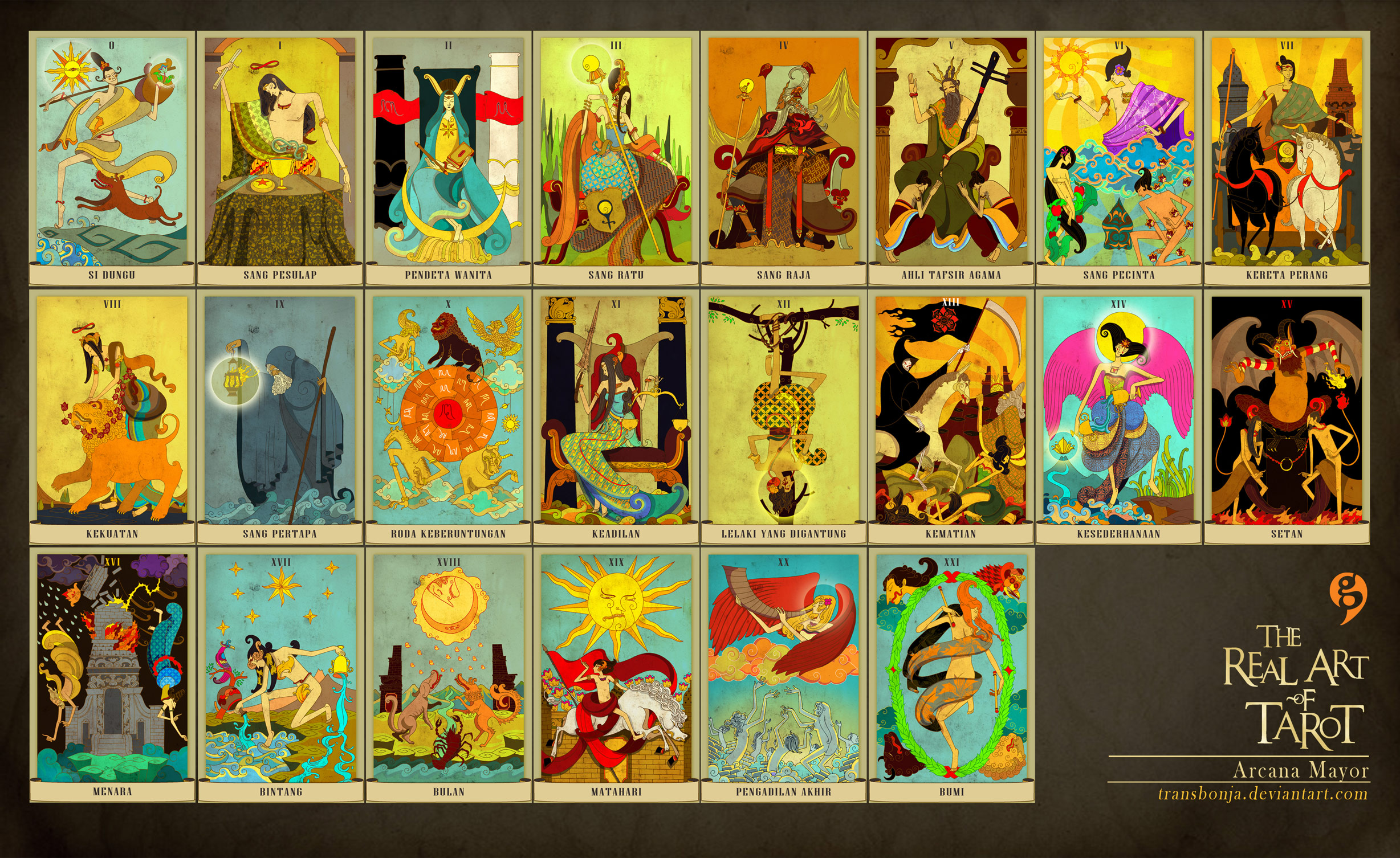
For those who aren't immediately recognising the images, the Rider-Waite-Smith is one of the most iconic and widely used tarot decks out there. Numerous modern decks have drawn inspiration (and often basic layout) from the Rider-Waite-Smith Tarot. A brief gander at Aeclectic will throw up a plethora of beautiful decks drawn in the RWS tradition (including the Real Art of the Tarot, a really rather swoon-worthy incarnation). They were originally commissioned from Pamela Colman Smith by Arthur Edward Waite and was the first to illustrate the minor arcana.

(I did briefly wonder about the copyright of the RWS images used and it does, perhaps unsurprisingly, have quite a lengthy and complicated history.)

I'm very much in love with it, though I have no idea what should be done with it. There's about two and a half yards, enough for a shirt, a waistcoat (perhaps even two), a skirt or the contrast of something.

Given the prominence of the Empress and the Ace of Wands, I suspect this isn't exactly the print for everyone, but if you feel inspired, drop me a line.
Related Posts Plugin for WordPress, Blogger...